How to Store Infant Formula Safely, Before and After Opening
Important: Breastfeeding is the best form of nutrition for infants. Infant formula should only be used on the advice of a doctor or qualified healthcare professional, and prepared and stored exactly as instructed.
Preparing a feed correctly is only half the job. How you store the tin, and how long a prepared bottle sits before your baby drinks it, matters just as much.
Powdered infant formula is not sterile. Warmth and time let bacteria multiply, and in Pakistan’s climate that happens faster than an imported label might assume.
Storing the tind
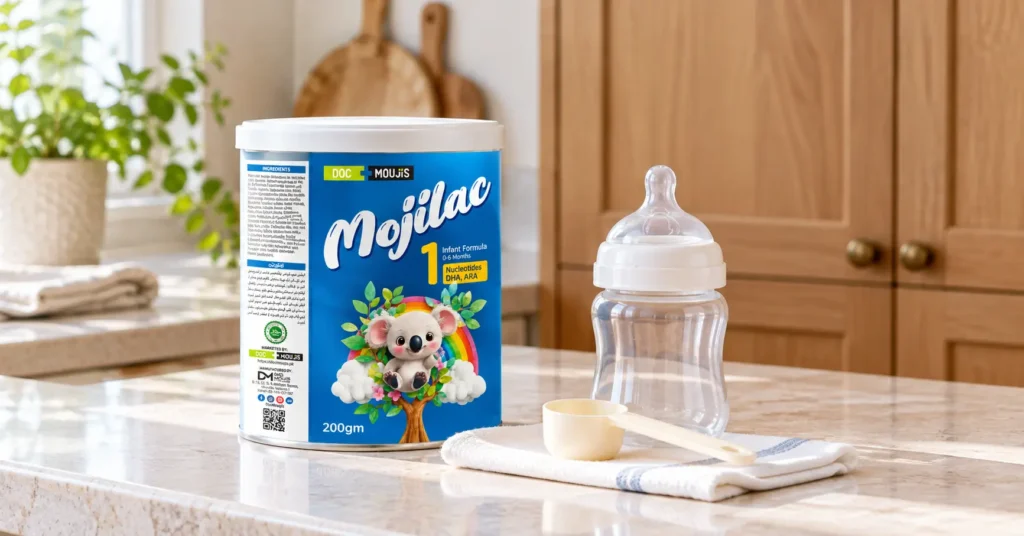
Before opening: keep it in a cool, dry cupboard away from the stove, sunlight and damp. Never in the fridge. Check the expiry date before you buy and again before you open it. Don’t use a tin that is dented, swollen, rusted or already unsealed.
After opening:
- Write the opening date on the lid. This one habit removes all the guesswork.
- Most manufacturers advise using the tin within four weeks. Check your own tin.
- Close the lid tightly every time, and keep it in the same cool, dry cupboard. Never refrigerate an opened tin — condensation ruins the powder.
- Use the dry scoop supplied, and keep it dry. Never use a wet spoon.
- Don’t move the powder into another container, and don’t mix an old tin into a new one.
Throw the tin away if the powder clumps, changes colour, smells off, shows any sign of moisture or insects, or if you can’t remember when you opened it.
How long a prepared bottle stays safe
The safest approach is to make each feed fresh and throw away whatever isn’t drunk. When that isn’t possible, these are the general limits — always follow your own tin’s instructions.
| Situation | Safe for |
|---|---|
| Left at room temperature | 2 hours |
| Cooled and refrigerated straight away (5°C or below) | 24 hours |
| Once your baby has started drinking | 1 hour |
| In a cool bag with an ice pack | 4 hours |
That one-hour rule surprises many parents. Once a baby’s mouth touches the teat, bacteria from saliva enter the milk. A half-finished bottle can’t be saved, and must never go back in the fridge.
Mistakes to avoid
- Don’t store bottles in the fridge door. It’s the warmest part. Use a shelf at the back.
- Check your fridge is at 5°C or below. With load shedding, a fridge can warm up without you noticing. If the power has been off for a long stretch, throw prepared feeds away.
- Never microwave a bottle. It creates hot spots that can scald your baby even when the bottle feels cool. Stand it in warm water instead.
- Never freeze formula, or top up an old bottle with fresh milk.
Travelling with formula
Carry the ingredients separately, not a made-up bottle: pre-measured powder in a clean dry dispenser, and freshly boiled water in a vacuum flask. Make the feed when your baby needs it, then cool it. Always test the temperature on the inside of your wrist.
When to throw a feed away
Out of the fridge over two hours. Started over an hour ago. In the fridge over 24 hours. Left in a warm car. Smells or looks different. Or you simply aren’t sure how long it’s been sitting.
Throwing away a feed costs a little money. Getting it wrong can make a baby seriously ill.
When to call your doctor
Contact your pediatrician promptly if your baby has diarrhoea or vomiting, a fever, refuses feeds, is unusually sleepy, or shows signs of dehydration such as fewer wet nappies or a dry mouth. Babies dehydrate quickly, so don’t wait.
Frequently asked questions
How long does formula last after opening?
Most manufacturers say four weeks. Check your tin and write the opening date on the lid.
Can I keep an opened tin in the fridge?
No. Damp air makes the powder clump and spoil. A cool, dry cupboard is correct.
Can I prepare bottles in advance for the night?
Fresh is safest. If you prepare ahead, cool quickly, refrigerate immediately at 5°C or below, and use within 24 hours.
Can I reuse milk my baby didn’t finish?
No. Throw it away within an hour of the feed starting.
This article is general information, not medical advice. Always follow the preparation and storage instructions printed on your formula tin, and consult your pediatrician about your baby’s feeding.