How to Prepare Infant Formula Safely: A Step-by-Step Guide
Important notice: Breastfeeding is the best form of nutrition for infants. Infant formula should be used only when a doctor or qualified healthcare professional advises that it is necessary.
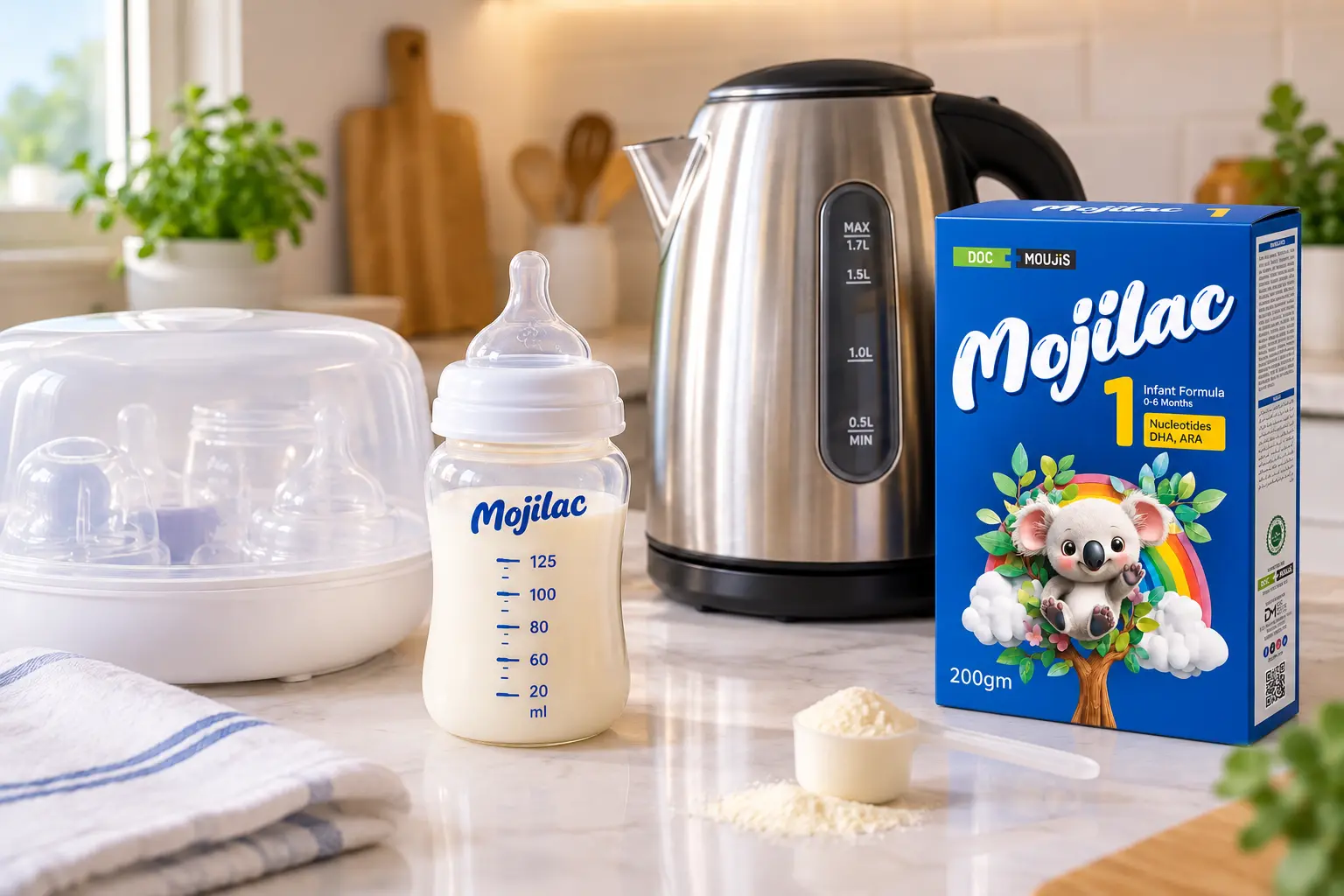
Most parents learn to make up a bottle in the first exhausted week, usually from whoever happens to be standing in the room. It gets passed down like a recipe — a bit of this, a scoop of that, test it on your wrist.
And mostly it works out. But formula preparation has a few details that genuinely matter, and they are not the ones people usually worry about.
This guide covers what those are, why they matter, and how to get it right without turning every feed into a procedure.
Why preparation matters more than most parents realise
Here is the part almost nobody is told: powdered infant formula is not a sterile product.
It is not possible to make it sterile. The manufacturing process reduces bacteria to very low levels, but the powder itself can still contain small amounts of bacteria — and if a feed is made up wrongly and left sitting, those bacteria multiply.
This is not a reason to panic. It is simply the reason the preparation instructions exist, and why they are more specific than they look. Every step below exists because of it.
Ready-to-feed liquid formula is sterile until opened. Powder is not. That single difference explains almost everything that follows.
What you need before you start
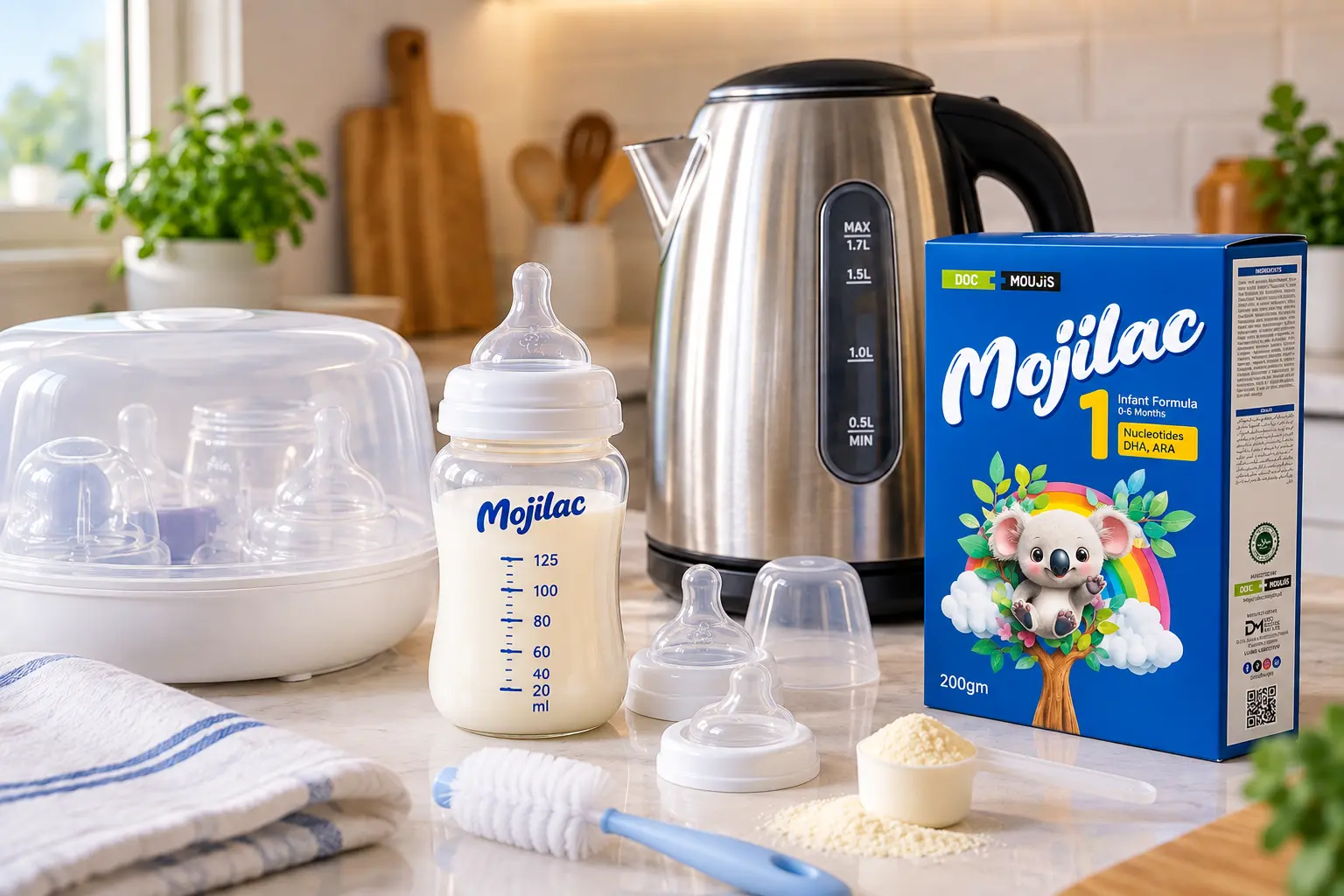
- Bottles, teats and caps
- A steriliser, or a large pan for boiling
- A bottle brush
- Fresh drinking water
- A kettle
- Your tin of formula, with the scoop that came inside it
Use the scoop that came in the tin you are currently using. Scoops differ between brands and sometimes between products from the same brand. A scoop from an old tin can hold a different amount, and that changes the concentration of every feed you make.
Step 1: Clean and sterilise
Wash your hands with soap before you begin. Clean the surface you are working on.
Wash bottles, teats and caps in hot soapy water, using the brush to get inside the teat. Then sterilise them — by boiling for ten minutes, using a steam steriliser, or with sterilising solution.
Sterilise everything that touches the feed, every single time, until your baby is at least twelve months old. This includes the caps and the rings, not just the bottle.
Leave items in the steriliser until you need them, and wash your hands again before taking them out.
Step 2: Boil the water
Fill the kettle with fresh drinking water from the tap. Do not use water that has been boiled before, and do not use bottled mineral water unless your doctor has specifically advised it — the mineral content varies and some is too high for infants.
Boil the water and then let it cool.
This is where the single most important detail sits. The World Health Organization advises that water used to make up powdered formula should be no cooler than 70°C, because that temperature kills the bacteria that may be present in the powder. Water reaches roughly that point after about thirty minutes of cooling.
Follow the instructions printed on your pack. They take precedence over anything written here. If your pack specifies a different temperature and you are unsure why, ask your paediatrician or pharmacist — it is a reasonable question and they will not mind being asked.
Step 3: Measure the water first
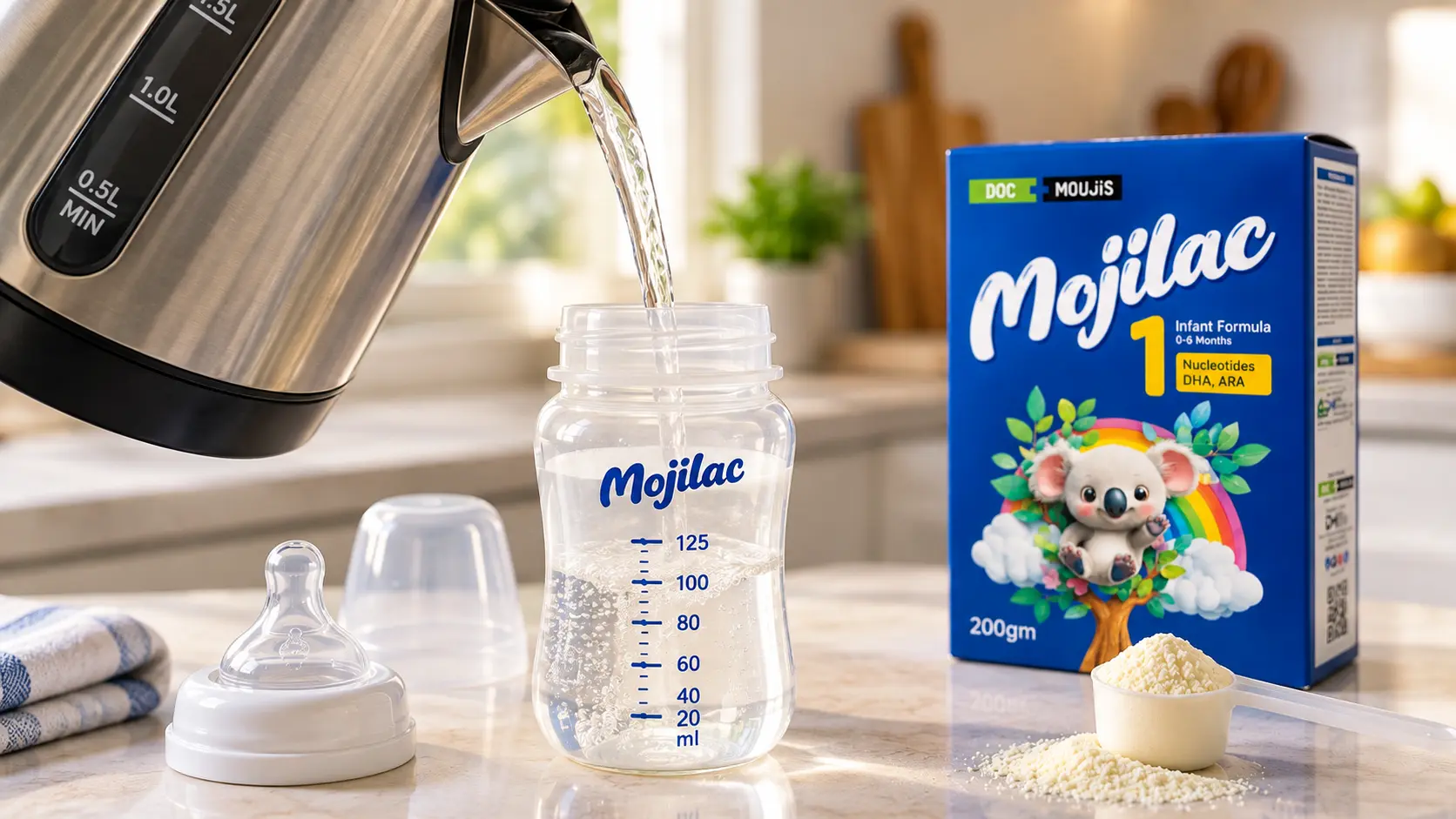
Pour the water into the bottle before adding any powder.
Check the measurement at eye level, with the bottle standing on a flat surface. Looking down at an angle makes the level appear higher than it is.
Water first, powder second. Doing it the other way round changes the final volume and makes the feed more concentrated than intended.
Step 4: Add the powder
Use the scoop from the tin. Fill it and level it off with the back of a clean knife or the leveller built into the tin.
Do not pack the powder down. Do not heap the scoop. Do not add an extra half scoop because your baby seems hungry.
Too much powder is genuinely harmful. It puts strain on a baby’s kidneys and can cause dehydration and constipation. Too little means your baby is not getting enough nutrition. Neither is a small mistake, and both are easy to make when you are tired.
Add the exact number of scoops stated on the pack for the amount of water you measured.
Step 5: Mix, cool and check
Put the cap and ring on and shake until the powder has fully dissolved. Hold the teat covered while you shake.
Cool the bottle quickly by holding it under cold running water or standing it in a bowl of cold water. Keep the level of the cooling water below the neck of the bottle.
Test the temperature on the inside of your wrist. It should feel warm, or not feel like anything at all. If it feels hot, it is too hot.
Never use a microwave. Microwaves heat unevenly and create hot spots in the milk that can scald a baby’s mouth even when the bottle feels fine on the outside.
Step 6: Feed, then discard
Feed your baby within two hours of making up the bottle.
Throw away anything left in the bottle after a feed. Not in an hour, not after a nap — straight away.
Once a baby has fed, bacteria from their mouth enter the milk and begin multiplying. A half-finished bottle kept for later is one of the most common causes of preventable illness in formula-fed babies, and it is completely avoidable.
Make up the amount your baby usually takes. If they consistently finish and still seem hungry, make slightly more next time — do not stretch one feed across two sittings.
The mistakes that come up most often
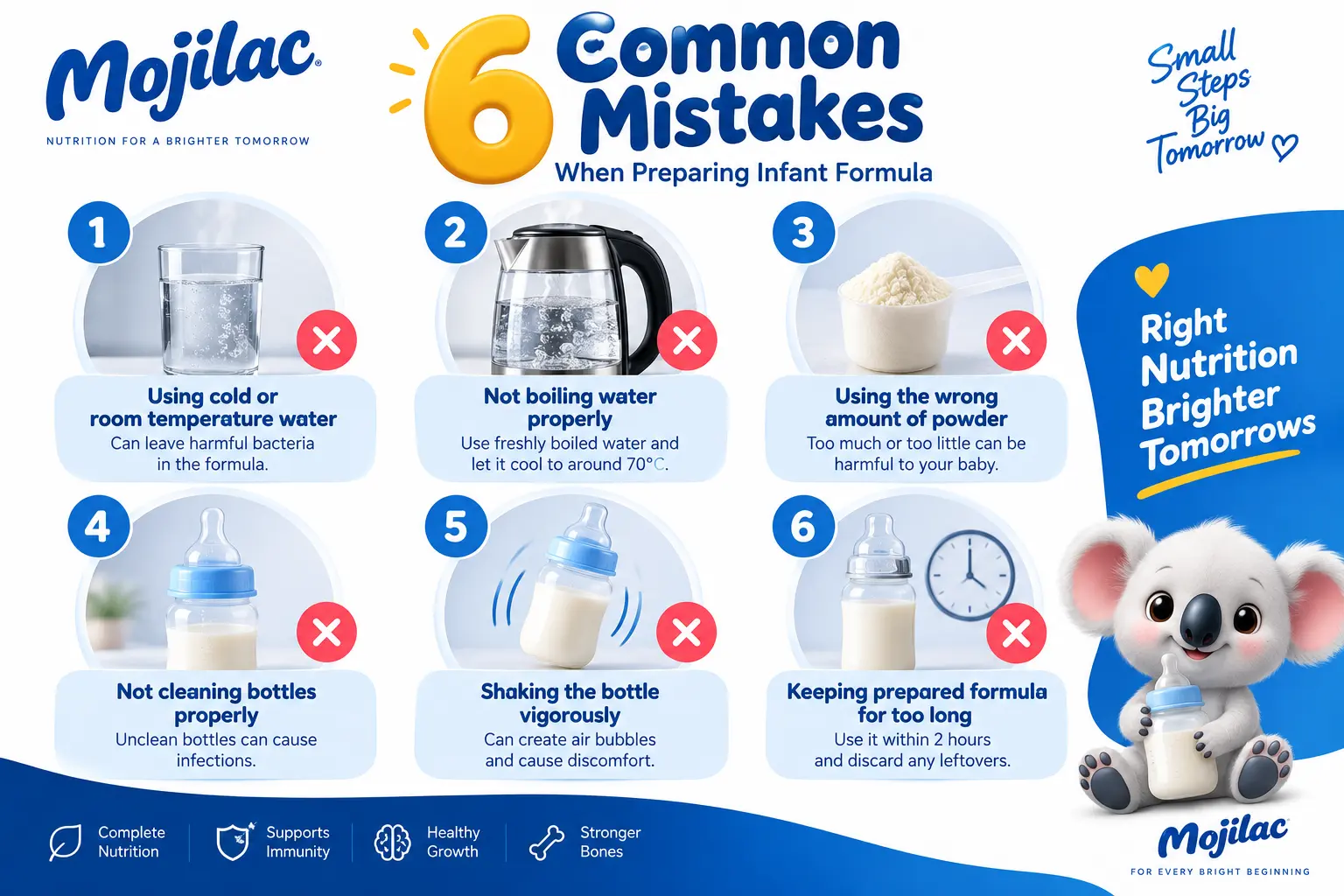
Making a batch for the day. It saves time and it is not safe. Make each feed fresh.
Using a scoop from a different tin. Scoop sizes vary. Use the one in your current tin.
Adding an extra scoop. A hungrier baby needs a bigger feed, not a stronger one.
Reheating a feed. Once it has cooled and been left, discard it.
Topping up with hot water. If the feed is too cool, discard it and make a fresh one. Adding hot water changes the concentration.
Storing a made-up bottle in the car or in a bag. Warm conditions are exactly where bacteria multiply fastest.
Storing the tin
Keep the tin in a cool, dry place away from direct sunlight. Do not keep it in the refrigerator — moisture causes the powder to clump and can affect measurement.
Close the lid firmly after every use and keep the scoop inside the tin, dry. Do not wash the scoop between uses; wipe it if necessary and leave it dry.
Use the tin within the period stated on the label after opening. This is usually shorter than people expect, and it is printed there for a reason.
When to speak to your doctor
Contact your paediatrician if your baby:
- Is consistently unsettled after feeds
- Is not gaining weight as expected
- Has persistent vomiting or diarrhoea
- Seems to be constipated
- Is refusing feeds
Please do not change formula, dilute a feed, or add anything to a bottle on your own. Any of these can make a situation worse, and the underlying cause usually needs a proper look rather than a change of tin.
In short
Sterilise everything. Water first, powder second, scoop levelled. Follow the temperature on your pack. Feed within two hours and throw away what is left.
That is the whole of it. It becomes second nature within a fortnight, and the details above are the ones worth getting right while it still feels like a procedure.
This article is general information and is not medical advice. Always follow the preparation instructions printed on your pack, and consult a qualified doctor or paediatrician about your baby’s feeding.
Breastfeeding is best for your baby. Infant formula should be used only on the advice of a healthcare professional.